


Losing someone you love is never easy. During painful moments, kind and thoughtful sympathy messages can bring warmth, comfort, and emotional support to grieving hearts. Many people struggle with finding the right words because they fear saying something wrong. However, even simple and sincere condolence messages can help someone feel less alone during a difficult time.
Whether you are writing a card, text, or letter, genuine words often leave a lasting impact. Thoughtful sympathy wishes, caring words of comfort, and meaningful heartfelt condolence messages remind grieving families that love and support still surround them. A compassionate message may seem small, yet it can provide strength, healing, and hope when someone needs it most.
What Are Condolence Messages and Why They Matter

Thoughtful heartfelt condolence messages help people feel seen during painful moments. Grief often leaves people emotionally exhausted. A kind message may not erase pain, yet it can provide support and strength when emotions feel overwhelming. Many Americans send cards, flowers, or digital notes because offering sympathy remains an important cultural gesture after the loss of a loved one.
People also use sympathy wishes, bereavement messages, and thoughtful sympathy notes to express care when words feel difficult. During the grieving process, emotional connection matters deeply. Even short phrases filled with kindness can bring peace and healing. Families often remember compassionate messages long after the funeral ends because sincere support creates lasting emotional comfort.
| Type of Message | Purpose |
| Sympathy Card | Personal emotional support |
| Condolence Text | Quick comfort during grief |
| Memorial Message | Honors the person’s memory |
| Religious Message | Offers faith and spiritual hope |
Tips for Writing a Meaningful Condolence Message
Writing meaningful sympathy card wording begins with honesty. You do not need poetic language. Simple statements filled with empathy often sound more comforting. Start by acknowledging the loss directly. Then offer sincere sympathy and remind the grieving person you are available whenever they need a listening ear or a shoulder to cry on.
Avoid making the conversation about your own experiences. Focus on the grieving person instead. Share positive memories if appropriate. Mention the loved one’s kindness, humor, or generosity. These small details help honor a memory while creating emotional connection. Many people also send sympathy flowers or food baskets alongside condolence cards because practical support matters during emotionally draining days.
| Helpful Phrase | Why It Works |
| “I’m deeply sorry for your loss.” | Shows empathy clearly |
| “I’m here whenever you need me.” | Offers reassurance |
| “Their kindness touched many lives.” | Honors the deceased |
| “You are in my thoughts and prayers.” | Provides comfort |
Short and Simple Condolence Messages

Sometimes short messages feel the most powerful. Brief words often sound more sincere than overly formal writing. Many people search for short sympathy card messages because they want to express care without sounding robotic. A few heartfelt sentences can provide genuine comfort during a painful season of life.
Simple condolence text messages also work well when you cannot attend a funeral or visit personally. Short notes like “Thinking of you today” or “Sending love during this difficult time” can still bring warmth. Even quick RIP messages may offer reassurance when written sincerely with kindness and compassion.
| Short Sympathy Message | Best Use |
| “My deepest sympathy for your loss.” | Sympathy cards |
| “Sending love and strength.” | Text messages |
| “Keeping your family in my prayers.” | Religious support |
| “Thinking of you always.” | Personal condolence notes |
Also Read: Best Love Messages for Her, Him & Every Romantic Moment
Condolence Messages for Family Members
The death of a close family member creates profound sorrow. Compassionate loss of a parent messages often focus on love, guidance, and lifelong memories. Parents shape identity and emotional security. Their absence leaves silence that words rarely fill completely. During such moments, families need ongoing grieving family support instead of temporary sympathy.
Similarly, loss of a spouse condolences require sensitivity because spouses share daily life together. Messages should acknowledge emotional pain while offering hope gently. Mentioning cherished memories can comfort grieving partners. Families appreciate messages that recognize the importance of lifelong love and shared experiences because those memories become emotional anchors during grief.
| Family Loss | Supportive Focus |
| Parent | Guidance and love |
| Spouse | Partnership and devotion |
| Child | Compassion and gentleness |
| Sibling | Shared memories |
Sympathy Messages for Friends and Loved Ones

Strong friendships often feel like family bonds. Meaningful condolence messages for friends should sound warm, personal, and emotionally present. Instead of formal wording, speak naturally. Remind your friend they do not need to carry grief alone. Genuine comforting words often provide more healing than elaborate phrases.
Close friends appreciate emotional honesty. A message saying, “I’m always here for you,” can offer real reassurance during overwhelming sadness. Many people remember who stayed close during grief. Consistent check-ins, thoughtful cards, and caring texts create lasting heartfelt support during moments filled with sorrow and grief.
“Grief is love with nowhere to go.” Jamie Anderson
Professional Condolence Messages for Colleagues and Acquaintances
Professional settings still require compassion. Respectful professional condolence messages should sound supportive without becoming overly personal. Workplace grief affects focus, emotions, and productivity. Sending kind words shows emotional intelligence and care. Even simple sympathy messages for coworkers can strengthen trust and workplace relationships.
When writing to colleagues, maintain respectful tone while expressing empathy. Mention support without becoming intrusive. Statements such as “Wishing you comfort and strength” work well professionally. Many companies in the United States also send cards, flowers, or donations to show support after a death connected to an employee’s family.
| Professional Situation | Appropriate Message Style |
| Coworker Loss | Respectful and supportive |
| Boss or Manager | Formal yet warm |
| Client Loss | Professional sympathy |
| Acquaintance | Brief compassion |
Religious and Spiritual Condolence Messages

Faith often becomes a source of strength after loss. Many people turn toward prayer and spiritual reflection during painful times. Thoughtful religious sympathy messages can provide reassurance when grief feels unbearable. Verses about hope, peace, and eternal love may help grieving families feel emotionally supported.
Spiritual messages should match the recipient’s beliefs respectfully. Christian families may appreciate Bible verses and healing prayers while others may prefer universal messages about love and remembrance. Compassionate faith-based words can encourage emotional healing while reminding families their loved one’s memory lives on through shared love and kindness.
| Religious Message Theme | Emotional Benefit |
| Prayer | Spiritual comfort |
| Bible Verse | Hope and peace |
| Faith Reflection | Emotional reassurance |
| Blessing | Encouragement |
Condolence Messages for Sudden or Unexpected Loss
Unexpected death creates emotional shock that feels impossible to process. Many people struggle to find suitable condolences for sudden death because sudden grief often arrives with confusion and disbelief. During such heartbreaking moments, compassionate language matters deeply. Focus on presence, support, and emotional reassurance rather than explanations.
Gentle mourning support messages should acknowledge the tragedy honestly. Families facing unexpected loss often feel emotionally numb. Offering practical help, meals, or daily assistance can provide relief during chaos. Even small gestures filled with care become meaningful sources of comfort during painful uncertainty and emotional exhaustion.
“Unable are the loved to die. For love is immortality.” Emily Dickinson
What to Avoid Saying in a Sympathy Card
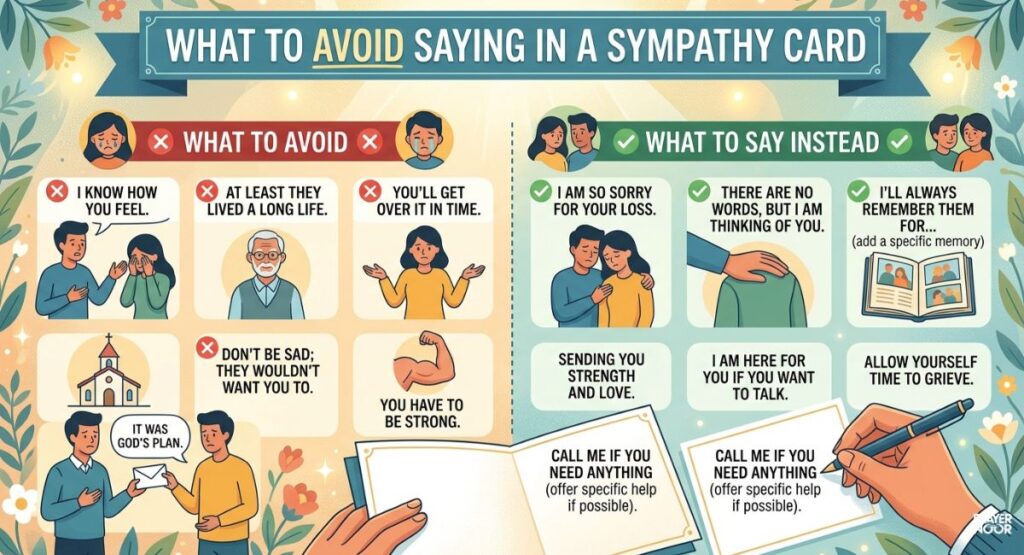
Certain phrases may unintentionally cause pain. Statements like “Everything happens for a reason” often feel dismissive during intense grief. Avoid comparing losses or saying you completely understand someone’s pain. Every person experiences grief differently. Instead, focus on listening, empathy, and sincere emotional presence.
Avoid giving unsolicited advice or rushing someone’s healing process. Grief has no deadline. Compassionate funeral sympathy messages should offer patience rather than solutions. Kindness, emotional awareness, and thoughtful communication matter more than perfect wording. Genuine care always speaks louder than polished sentences.
| Avoid Saying | Better Alternative |
| “I know how you feel.” | “I’m here for you.” |
| “They’re in a better place.” | “I’m deeply sorry.” |
| “You’ll move on soon.” | “Take all the time you need.” |
| “Stay strong.” | “Sending love and support.” |
Final Thoughts on Heartfelt Condolence Messages
Compassionate communication matters deeply during moments of grief. Thoughtful condolence note ideas, kind sympathy greetings, and supportive messages can become emotional lifelines for grieving families. You never need perfect words. You simply need honesty, empathy, and willingness to stand beside someone during painful days.
Whether you send flowers, cards, or messages online, your effort shows love. Meaningful comforting sympathy quotes, heartfelt support, and genuine care remind grieving people they are not alone. In many cases, one sincere sentence can provide more comfort than a thousand carefully polished words.
FAQs
What is the best message for sympathy?
The best sympathy message is honest, warm, and compassionate. Simple words like “I’m deeply sorry for your loss. Please know I’m thinking of you and your family during this difficult time” can offer real comfort and emotional support.
How to write a short message of condolences?
Keep your condolence message short and sincere. You can say, “My deepest condolences to you and your family. Wishing you peace and strength in the days ahead.”
What is the most comforting thing to say at a funeral?
The most comforting words are often simple and heartfelt. Saying, “I’m here for you, and your loved one will always be remembered with love,” can bring peace and reassurance during grief.
What to say to someone who lost a loved one suddenly?
A sudden loss feels shocking and painful, so gentle words matter most. You can say, “I’m so sorry for your sudden loss. Please know you are in my thoughts, and I’m here whenever you need support.”
What is an uplifting message for someone who lost a loved one?
An uplifting message should offer hope without ignoring the pain. Try saying, “May the beautiful memories you shared bring you comfort and strength, and may love surround you during this difficult journey.”

Welcome to Prayer Noor! I’m Sagar Khan, an AI-Powered SEO, and Content Writer with 4 years of experience.
I help websites rank higher, grow traffic, and look amazing. My goal is to make SEO and web design simple and effective for everyone. Let’s achieve more together!